
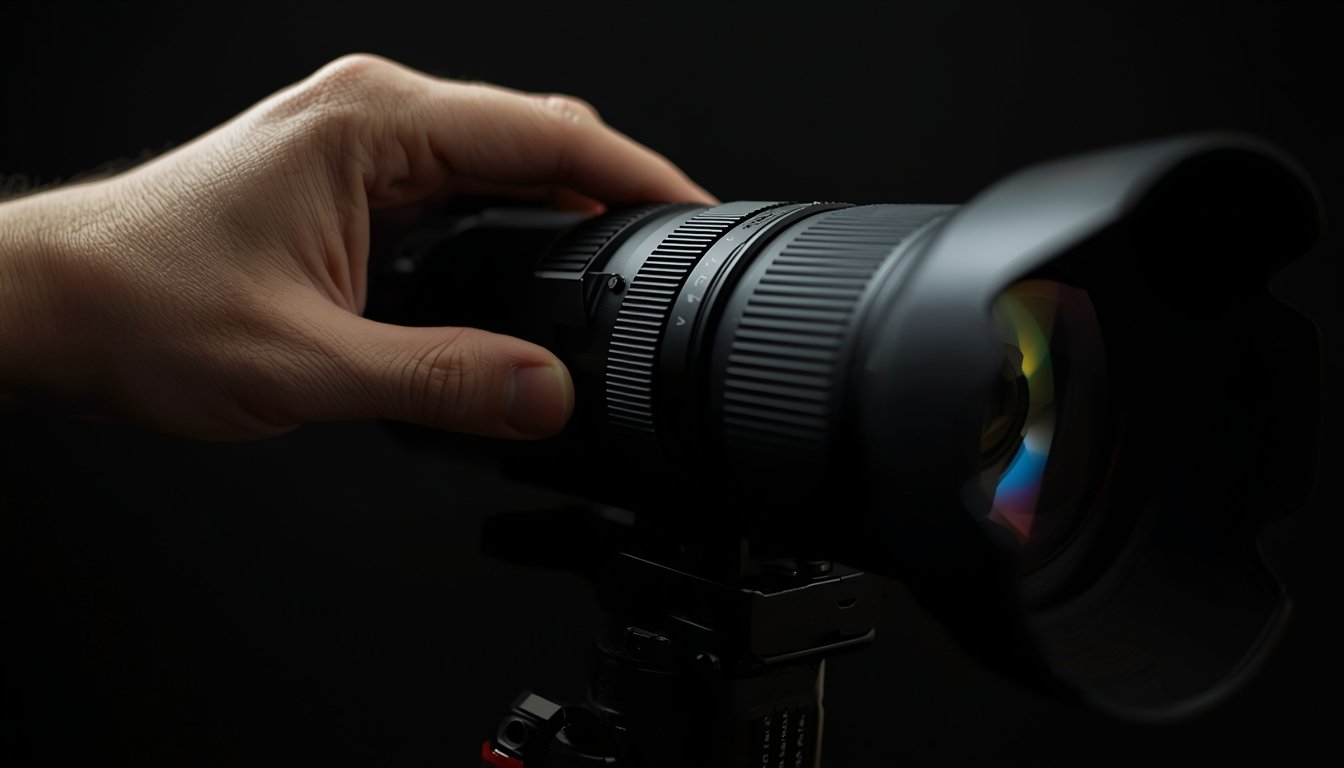
Computational imaging is moving from a feature set inside premium cameras to the operating logic of image capture itself. The practical shift is clear: cameras are becoming adaptive systems that assess scene content, motion, light, focus behavior, and user intent before the shutter closes. For photographers, videographers, and production teams, that means image quality is increasingly defined by software intelligence, sensor behavior, and post-capture data handling rather than optics alone.
AI Imaging Redefines Camera Design and Control
Cameras are being designed around inference, not just optics
Camera manufacturers are building systems that treat the sensor feed as live data for analysis, correction, and prediction. The evidence suggests that future bodies will rely more heavily on onboard neural processing to manage autofocus, exposure decisions, subject recognition, and color consistency in real time. That changes the product itself: instead of a static machine capturing light, the camera becomes a scene interpretation engine.
This matters for professional users because control is shifting from isolated dials to intelligent parameter stacks. Technical analysis shows that AI-assisted capture can reduce missed focus, stabilize exposure in difficult mixed lighting, and improve subject separation without requiring aggressive postprocessing. At the same time, it raises a critical question for production teams, how much automation improves reliability before it begins to limit intentional creative control.
Manufacturers are already using computational imaging to shrink certain hardware demands while increasing performance in other areas. Smaller sensors can compete more effectively when paired with stronger denoising, subject-aware HDR, and motion compensation, but the tradeoff is often heat, power draw, and processing latency. Camera design in 2026 is no longer about sensor size alone, it is about the balance between optical capture, firmware intelligence, and silicon efficiency.
The new control layer is software-defined and user-specific
Professional imaging tools are moving toward adaptive interfaces that respond to shooting conditions and user profiles. A sports photographer may want aggressive subject tracking and instant buffer recovery, while a studio operator may prefer consistent color, tethering stability, and predictable manual overrides. The best systems will not force one workflow, they will expose enough granular control to let AI assist without hiding the underlying capture decisions.
The most valuable development is not full automation, but selective automation. AI can now assist with face and eye detection, depth estimation, scene recognition, rolling shutter correction, and even raw preprocessing before the file enters the editing environment. That creates a more efficient capture pipeline, although it also introduces dependency on firmware maturity, model tuning, and vendor update support.
Creative teams should evaluate these systems as long-term infrastructure, not just camera features. If a camera’s intelligence depends on cloud-connected training, slow updates, or a closed ecosystem, the operational risk grows quickly. If the control stack is transparent, local, and well documented, AI becomes a practical advantage that supports speed, consistency, and repeatability across large-scale production.
AI-assisted capture is altering expectations for image quality
The definition of "good" capture is changing because the camera can now produce a more finished file directly in body. Denoising, multi-frame synthesis, motion interpolation, and predictive sharpening are creating images that look cleaner at higher ISO values and in lower light than traditional capture pipelines allowed. That does not erase the value of optics or lighting, but it shifts where quality is gained.
For many commercial teams, the real benefit is not aesthetic alone, it is throughput. A cleaner first file reduces culling time, reduces retouching load, and accelerates delivery for clients who expect near-real-time turnaround. In fast-paced environments such as event coverage, live content production, and content studio work, the savings can be more valuable than subtle gains in per-pixel purity.
There is also a creative cost to consider. Some AI processing can flatten micro-contrast, over-smooth skin texture, or introduce subject-aware decisions that do not match editorial intent. The best imaging systems will offer reversible processing, raw preservation, and metadata transparency so that teams can decide how much intelligence belongs in capture and how much belongs in post.
Sensor Intelligence, Workflows, and Market Shifts
Sensor data is becoming the foundation of the imaging pipeline
Modern sensors are no longer passive light collectors, they are becoming high-bandwidth data sources that feed computational models. Backside illumination, stacked architectures, global shutters, and pixel-level readout improvements allow more scene information to be captured before software begins reconstruction. The data indicates that the sensor’s role will expand from producing an image to producing a structured dataset for software interpretation.
This development has major implications for workflow design. If camera files include richer metadata, depth cues, motion vectors, and lens behavior profiles, postproduction tools can make more informed decisions about sharpening, masking, noise reduction, and color transformation. In practical terms, that can reduce the number of manual correction steps and improve batch consistency across large jobs.
The challenge is interoperability. Imaging teams work across mixed ecosystems, and not every computational layer survives export cleanly. If sensor intelligence is locked into a proprietary pipeline, downstream editors, DAM platforms, and asset review systems may lose access to useful context. That makes open standards, metadata integrity, and predictable file handling more important than headline capture specs.
Workflow automation is now part of the camera decision
Camera procurement increasingly depends on how devices fit into the larger content pipeline. A capable body with weak tethering, slow ingest, poor metadata tagging, or limited cloud support can create more friction than a slightly less advanced sensor with better software integration. Technical analysis shows that productivity gains often come from workflow continuity, not isolated image quality boosts.
This is where AI imaging intersects with DAM systems, storage architecture, and collaborative review tools. If assets can be tagged at capture, routed automatically, and indexed with useful semantic metadata, the production cycle becomes faster and more searchable. That is especially important for agencies, publishers, and brands managing large libraries of reusable visual assets across campaigns, regions, and teams.
Below is a practical framework for assessing where computational imaging creates value in production environments.
| Smart Imaging Value Model | Capture Benefit | Workflow Benefit | Risk Factor |
|---|---|---|---|
| Onboard subject tracking | Higher hit rate on focus-critical shots | Less culling in edit | Model bias in unusual subjects |
| AI denoising at capture | Cleaner high-ISO output | Faster first-pass delivery | Texture loss in skin and fabric |
| Scene-aware exposure | Better highlight and shadow retention | Fewer correction cycles | Over-automation in complex lighting |
| Metadata-rich file output | More contextual asset data | Stronger DAM search and reuse | Proprietary tagging formats |
| Local inference processing | Lower dependency on cloud services | More consistent field operation | Power and heat constraints |
This framework matters because it frames imaging as operational infrastructure. A feature that saves three minutes per file can matter more than a marginal sensor upgrade when scaled across thousands of assets. Procurement teams should ask how the camera affects ingest, review, archive, reuse, and compliance, not just how it performs in isolation.
Market pressure is moving camera makers toward ecosystem thinking
The imaging market is now shaped by competition from smartphones, AI native software, and cloud-based creative platforms. Traditional camera makers can no longer rely on optical reputation alone, because buyers increasingly compare capture hardware against end-to-end workflow value. That includes firmware cadence, software compatibility, remote control, subscription models, and support for collaborative production environments.
The strongest brands will behave like platform companies. They will treat camera bodies, color science, cloud sync, mobile ingest, desktop editing, and asset governance as linked components of one system. That is especially important for professional users who need consistent color across devices, stable file handling, and predictable updates that do not break production during active assignments.
The market shift also favors vendors that can prove durability in enterprise and pro environments. Creative agencies, broadcasters, and hardware integrators want reliable service lifecycles, security-aware data handling, and clear interoperability with editing stacks, storage tiers, and review tools. Cameras that participate cleanly in that ecosystem will matter more than cameras that merely produce impressive demo footage.
FAQ
How will AI change the value of a high-end camera body over the next few years?
AI will make camera value depend more on processing architecture, firmware quality, and workflow integration than on sensor size alone. Buyers will judge whether the body improves speed, reduces editing overhead, and preserves creative control. The strongest systems will combine reliable inference, raw integrity, and open metadata handling for long-term production use.
Will computational imaging reduce the need for traditional lenses and lighting?
It will reduce dependency in some scenarios, but not eliminate them. Computational imaging can improve low-light capture, extend dynamic range, and improve subject separation, yet it cannot fully replace optical character, lighting design, or scene control. In commercial work, lenses and lighting remain essential for consistency, editorial intent, and brand-specific visual style.
What should production teams prioritize when evaluating AI-enabled imaging ecosystems?
Teams should prioritize file integrity, interoperability, latency, firmware support, and how the system affects downstream editing and asset management. A camera that captures impressive results but creates workflow friction can slow production. The best ecosystems improve capture reliability, preserve metadata, and integrate smoothly with DAM, storage, and review environments.
Conclusion: The Future of Computational Imaging: Where Cameras Meet Artificial Intelligence
Computational imaging is becoming the connective layer between camera hardware, creative software, and production infrastructure. The most important trend is not that AI makes images look better, but that it changes how images are captured, processed, searched, approved, and reused. For professionals, that means camera selection now has strategic consequences across the entire visual pipeline.
The next 18 months will likely bring more local inference in camera bodies, stronger subject-aware processing, tighter integration with editing software, and more pressure on manufacturers to support open metadata and workflow-friendly output. The winners will be systems that improve speed without obscuring control, and intelligence without weakening interoperability. For imaging teams, that is where the real competitive advantage will emerge.
Tags: computational imaging, AI cameras, sensor intelligence, camera workflows, visual technology, digital asset management, imaging hardware