
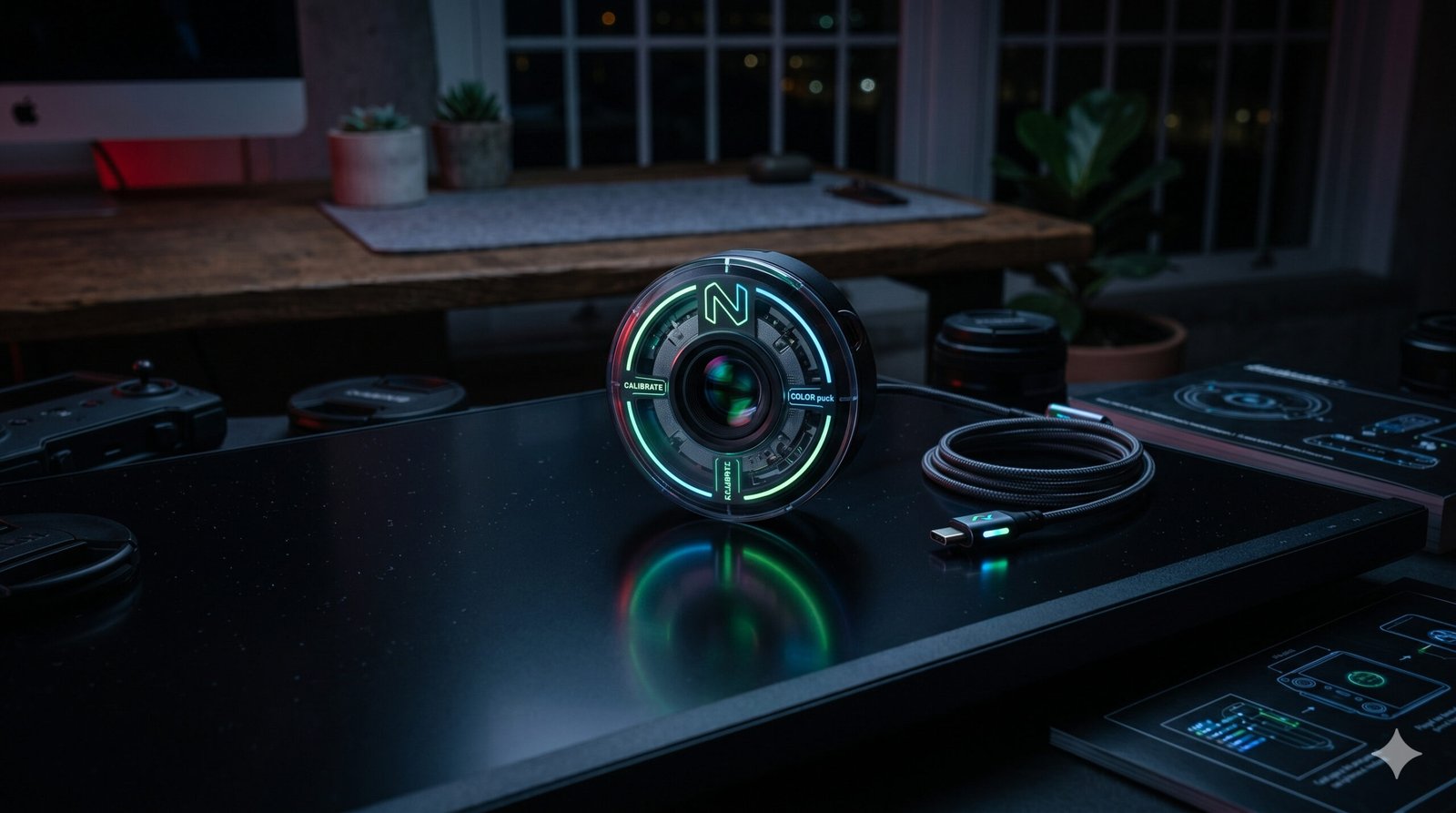
Aspherical lens technology has become one of the most important engineering responses to the demands of modern cameras, where smaller optical stacks, higher-resolution sensors, and computational imaging pipelines leave very little room for traditional lens error. The evidence suggests that the value of aspherical design is not just sharper corners or cleaner contrast, but a more efficient balance between optical precision, physical compactness, and manufacturing consistency across premium imaging systems. ## Aspherical Lenses and Precision Glass Design
Why Aspherical Geometry Matters
Aspherical lenses correct aberrations that spherical elements struggle to manage, especially coma, spherical aberration, and edge distortion. That matters because modern cameras no longer tolerate the softness or field curvature that once hid comfortably inside lower-resolution capture systems.
Technical analysis shows that the move toward high-density sensors has raised the optical bar across stills, cinema, and mobile imaging alike. A lens that looks acceptable at 24 megapixels can fall apart on a 50-megapixel full-frame sensor or a large-format video pipeline with aggressive sharpening and log-to-HDR processing.
Precision Glass, Molded Surfaces, and Manufacturing Reality
Precision glass for aspherical designs depends on tighter surface tolerances, cleaner material behavior, and highly controlled forming methods. Depending on the application, manufacturers may use ground glass, molded glass, hybrid elements, or advanced resin composites, each with different implications for cost, durability, and spectral behavior.
The data indicates that production difficulty rises sharply as curvature becomes more complex. A perfect aspherical profile is expensive to manufacture and even harder to inspect, which is why premium optics often reserve these elements for positions in the lens where the return on correction is highest.
Optical Design Economics in Modern Production
Aspherical elements reduce the need for additional corrective groups, which can lower total lens size and sometimes reduce weight. That creates design headroom for wider apertures, shorter flange distances, and more compact autofocus assemblies, all of which matter to camera manufacturers competing on portability and performance.
A useful assessment model for this space is the Aspherical Precision Value Matrix, which weighs four variables: correction gain, manufacturing tolerance, element count reduction, and downstream computational compatibility. A lens earns its place when the optical improvement outweighs its production complexity and when the image pipeline can preserve that benefit through processing.
| Lens Design Factor | Low Complexity Impact | High Complexity Impact | Strategic Implication |
|---|---|---|---|
| Surface Curvature | Easier mass production | Stronger aberration correction | Determines correction ceiling |
| Tolerance Control | Lower inspection burden | Higher rejection risk | Drives yield and pricing |
| Element Count | More internal correction groups | Fewer elements needed | Affects size and weight |
| Sensor Compatibility | Adequate for modest resolution | Critical for high-density sensors | Shapes product positioning |
Camera Imaging Performance and Optical Tradeoffs
Sharpness Is Only One Part of the Performance Story
Aspherical design can produce impressive center-to-corner consistency, but image quality is still governed by contrast transfer, flare resistance, chromatic behavior, and field flatness. Sharpness alone can mislead buyers, especially when a lens resolves detail well in one region but introduces distracting rendering changes across the frame.
The evidence suggests that modern camera systems depend on a negotiated balance between optical perfection and practical usability. A lens optimized too aggressively for raw detail may show harsher bokeh, stronger manufacturing variance, or more noticeable focus shift, while a more balanced design may deliver better real-world consistency across mixed shooting conditions.
Tradeoffs Between Optical Correction and Rendering Character
Every aspherical surface changes the way light travels through the optical group, and that affects more than aberration reduction. Some lenses gain crisp edge definition but lose a degree of softness in out-of-focus transitions, while others preserve character yet surrender some measurable precision.
This tradeoff matters in professional workflows where stills and motion need different rendering priorities. Editorial photographers may want clinical edge definition for product and architecture work, while portrait and cinema operators may prefer a less corrected look that preserves smoother subject separation and gentler highlight behavior.
Computational Imaging Depends on Better Native Optics
Modern cameras increasingly combine lens design with in-camera correction, profile-based distortion mapping, and AI-assisted sharpening. Strong aspherical optics give these systems a cleaner starting point, which improves file integrity before any software intervention begins.
Technical analysis shows that this synergy is especially valuable for video and hybrid systems, where oversharpening, warping, and chromatic cleanup can cause artifacts across motion sequences. Better native correction reduces the computational load on the processor, shortens post-production cleanup, and improves consistency across batch workflows, which is critical for DAM systems and automated media pipelines.
FAQ
How do aspherical lenses improve image quality compared with conventional spherical lenses?
Aspherical lenses reduce aberrations that usually force designers to add extra corrective glass. That means better edge definition, less distortion, and more consistent sharpness across the frame. The improvement is most visible on high-resolution sensors, where optical flaws are easier to detect and harder for software correction to hide cleanly.
Why are aspherical elements still expensive if manufacturing has advanced so much?
The challenge is not just making the surface shape, but making it repeatably accurate at scale. Small deviations affect focus behavior, flare control, and frame-to-frame consistency, especially in fast lenses. Precision inspection, yield management, and material choice all contribute to cost, particularly in premium camera optics with tight tolerances.
Do computational corrections reduce the importance of aspherical lens technology?
Computational correction helps, but it cannot fully replace strong optical foundations. Software can reshape distortion and moderate shading, yet it cannot recover light that was scattered, blurred, or poorly focused at the sensor plane. Better native optics reduce artifact risk and give post-processing systems cleaner image data to work with.
Conclusion: Aspherical Lens Technology: Engineering Precision Glass for Modern Cameras
Aspherical lens technology remains a core enabler of modern camera performance because it addresses the optical limits that sensor resolution and creative production demands have made impossible to ignore. The strongest systems combine precision glass, disciplined manufacturing, and calibrated computational correction, producing images that are both technically reliable and commercially viable.
The strategic takeaway is clear: manufacturers that treat aspherical design as an isolated lens feature miss its broader role in imaging architecture, workflow efficiency, and product differentiation. Over the next 18 months, expect continued adoption in premium stills, hybrid video, and compact pro-grade systems, along with tighter integration between optical design, embedded processing, and profile-driven post-production pipelines.
Tags: aspherical lenses, precision glass, camera optics, optical engineering, computational imaging, lens design, modern cameras