
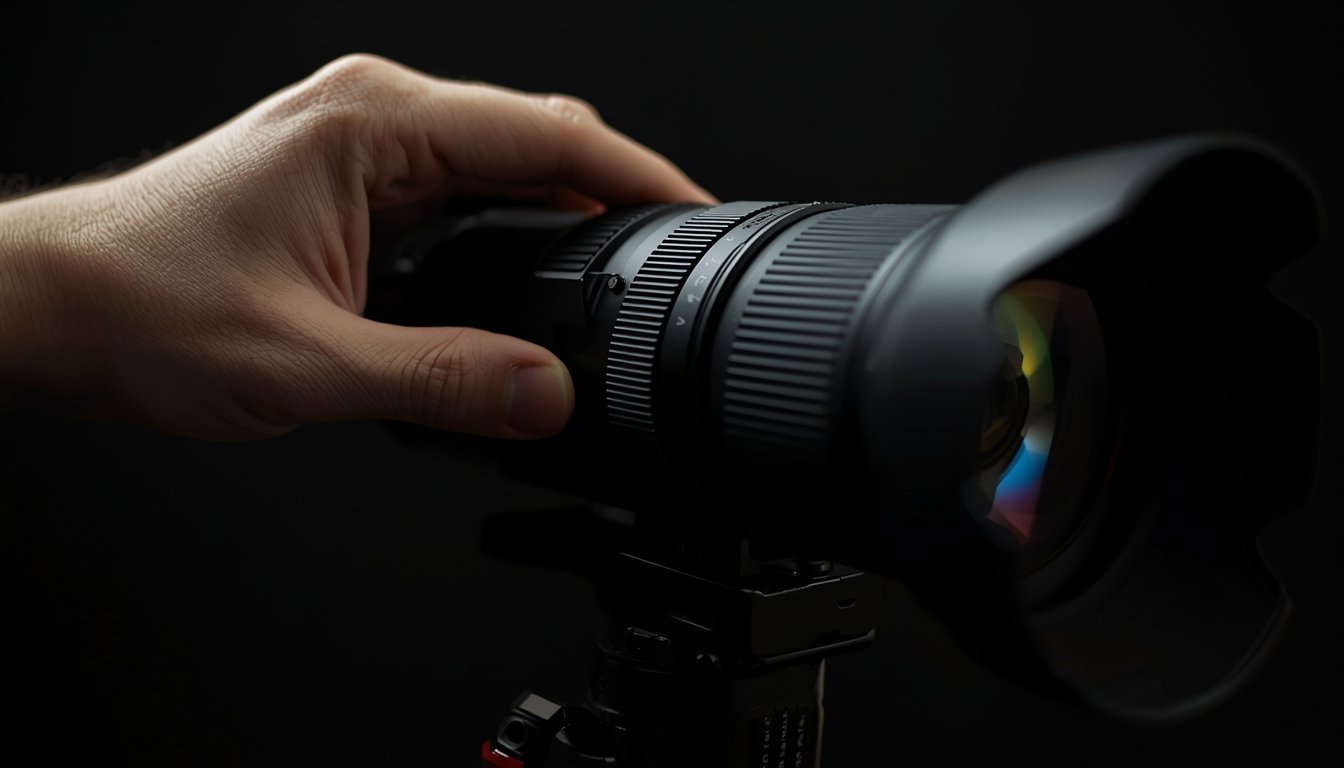
Computational imaging combines optics, sensor measurements and software to produce an image or other visual output. It includes multi-frame HDR, denoising, autofocus, depth estimation, super-resolution and scene-aware processing. Generative AI is one related field, but it is not synonymous with the image-signal processor (ISP) or with all computational photography.
For a closer look at the underlying hardware, see our guide to digital sensor architecture.
Separate the processing layers
The sensor records measurements and metadata. The ISP performs operations such as black-level correction, demosaicing, noise reduction, colour processing, sharpening and encoding. Camera firmware coordinates capture, exposure, autofocus and system behaviour. Generative models may create or modify image content and should be treated as a separate processing stage with distinct disclosure and provenance requirements.
One important sensor-level development is stacked CMOS sensor technology, which changes how pixel and circuit structures are arranged.
Documented implementation examples
- Google HDR+: Google Research has published a burst-photography pipeline that aligns and merges multiple raw frames to improve dynamic range and low-light imaging. This is a specific multi-frame computational method, not a generative image model. See Google’s HDR+ research.
- Canon Dual Pixel CMOS AF: Canon’s on-sensor phase-detection implementation uses sensor data for focus measurement in Live View and video. This is autofocus processing, not image generation. See Canon’s 2013 announcement.
- Sony α9 III: Sony announced a full-frame global-shutter sensor in the α9 III, illustrating a sensor-architecture development rather than an AI image-generation feature. See Sony’s announcement.
Scene-aware exposure and rolling-shutter correction
Scene-aware exposure may combine metering, subject recognition and highlight/shadow analysis, but the exact behaviour is camera-specific. Rolling-shutter correction may use readout timing, gyro data or image analysis; it cannot remove all motion artefacts. Do not claim these features exist on a named camera without a manufacturer specification or reproducible test.
Evaluation framework
For each camera, record model, firmware, sensor mode, RAW format and processing settings. Test static and moving scenes, low light, high contrast, fine texture and fast motion. Measure noise, dynamic range, readout time, focus performance, processing latency and artefacts. Keep RAW capture and generated derivatives separate.
Mobile implementations provide another useful comparison; see our article on smartphone computational photography.
Conclusion
Computational imaging will continue to combine sensor design, ISP processing and learned methods, but those layers should not be conflated. Named implementations illustrate the range of approaches; claims about future performance require model-specific documentation and measured results.